
Continental AG announced that it is assessing the option to discontinue tyre production at its Gqeberha factory in South Africa. The company has launched a statutory consultation process with labour representatives. If no viable alternative solution can be reached through negotiations, the historic plant may cease manufacturing operations in early 2027, directly affecting around 950 employees.
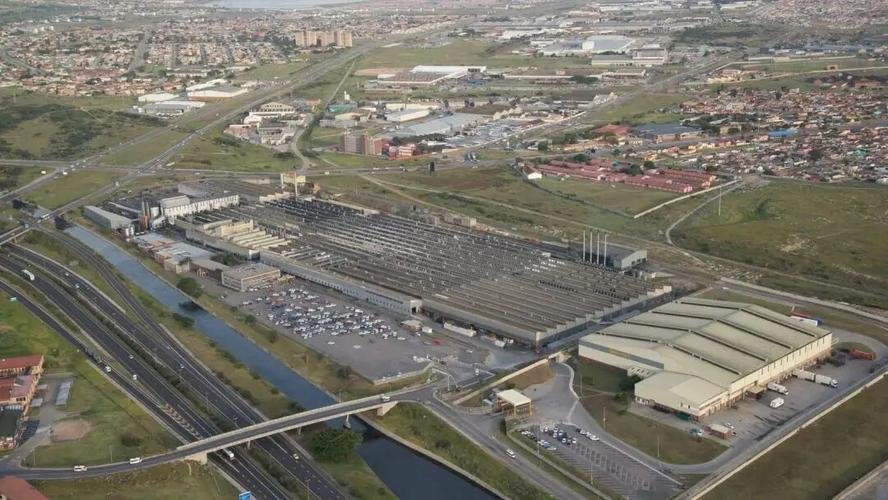
Commissioned in 1947, the facility began producing Continental branded tyres in 1985. It has long supplied local South African vehicle manufacturers and the broader African replacement tyre market, serving as Continental’s long-standing manufacturing hub on the continent.
Continental cited three core challenges behind the review:
The plant has operated at persistently low capacity utilisation for years. Despite repeated restructuring and profitability improvement initiatives, utilisation rates failed to recover.
Influx of low-cost imported tyres squeezes profit margins through fierce price competition.
Rising local electricity and energy costs, ageing infrastructure and supply chain disruptions keep manufacturing expenses high and undermine production stability.
A key takeaway: the proposed shutdown does not equal Continental’s withdrawal from the African market. The group confirmed South Africa and Africa remain strategically important markets. Even if local tyre production stops, Continental’s local sales entity and BestDrive retail service network will stay fully operational. The region will then be supplied mainly by finished tyres imported from overseas production bases. The proposal is still subject to consultation and has not been finalised.
This is not an isolated incident; it marks another phase of capacity rationalisation in South Africa’s tyre industry. Bridgestone closed its local tyre lines in the same region in 2020, followed by Goodyear’s tyre plant in Kariega in 2025. Should Continental’s shutdown proceed, the footprint of top global tyre manufacturers with local South African production will shrink sharply, and the historic tyre industrial cluster in the Eastern Cape will keep contracting.
The South African tyre market has undergone a fundamental structural shift. Replacement tyres now dominate demand, and low-cost imported tyres have captured a larger share than domestically produced products. Legacy local factories are burdened with high fixed costs and low operating rates, putting them at a disadvantage against affordable imports. Premium tyre brands struggle to compete with low-price imported tyres via local manufacturing.
The case illustrates a prevailing strategy adopted by major global tyre players: protect brand access to end markets while phasing out ageing, high-cost, underutilised heavy-asset production lines. Sales, retail and after-sales networks are retained to maintain brand presence, with product supply shifted to imports from more efficient overseas manufacturing bases. In recent years, leading European and American tyre makers have reshuffled their global manufacturing footprint. Instead of building factories in every target region, they concentrate production in locations with advantages in cost, supply chain and scale, separating manufacturing from brand and channel operations.
The manufacturing retreat will also ripple through upstream rubber supply chains. Fewer local tyre plants translate into shrinking orders for carbon black, rubber additives, mixing and processing facilities, alongside weaker domestic demand for raw rubber. African tyre demand itself has not disappeared; the demand pattern is transforming from local vertical manufacturing to finished tyre imports. For Chinese tyre exporters and used rubber machinery traders, the African replacement tyre market still holds opportunities, yet room for new or surviving local tyre manufacturing capacity keeps narrowing, making trading business more critical.
At its core, the logic behind successive closures of overseas legacy tyre factories is consistent. When a plant lacks scale benefits, faces rising energy, infrastructure and labour costs, and competes against large volumes of low-price imports, while capacity utilisation stays below the break-even threshold, internal cost-cutting upgrades alone rarely reverse the situation. Capacity utilisation has become a critical KPI alongside raw material costs for both new tyre projects and existing factories.
The African tyre landscape is being reshaped. Demand remains robust, yet the dividend for local heavy-asset tyre manufacturing is fading. International brands keep scaling back local production and switching to import distribution, while affordable imported tyres gain more ground in the replacement segment. Competition in this market will gradually shift from local factory construction to cross-border supply chain management, global capacity allocation and brand & channel operation.
DLFTECH is a professional equipment marketing & service company built by a senior R&D and marketing team in the tire & conveyor belt equipment industry. Benefiting from the rapid follow up of the international rubber industry's process re-engineering and the demand for industrial intelligence, DLFTECH, the best of the best, has rapidly developed into a new star in the international rubber machinery industry.
If any tire or conveyor belt industry customers need such as tire bead winding line, tire mold laser cleaning system, hydraulic curing press for PCR/TBR, etc., please feel free to contact info@delphygroup.com.